
PJM · Q4
Capacity auction repricing and the data center premium
How the 2025 BRA results reshape capacity values, queue strategy, and hyperscale load deliverability across the RTO.
Read brief →

Gridur delivers infrastructure intelligence, transmission awareness, market positioning, and strategic advisory capabilities for the next generation of energy and AI-driven industrial expansion.
AI compute demand, hyperscale data center expansion, and accelerating electrification are colliding with a transmission system designed for a previous century. Power availability — not capital — is becoming the binding constraint on the next industrial cycle.
Strategic positioning around grid capacity, interconnection access, and transmission corridors will define the winners of the next decade of infrastructure deployment.
Real-time situational awareness across grid, generation, and load expansion vectors.
Learn more →Congestion modeling, queue diagnostics, and interconnection feasibility across PJM and MISO.
Learn more →Hyperscale-grade siting, power adjacency, and load deliverability assessment.
Learn more →Origination, structuring, and infrastructure positioning for institutional energy capital.
Learn more →Parcel-level positioning informed by transmission, substation, and utility capacity layers.
Learn more →Capacity, energy, and ancillary market intelligence with congestion-aware forecasting.
Learn more →Stakeholder mapping and political risk modeling for long-cycle infrastructure assets.
Learn more →Institutional-grade reporting on infrastructure scarcity, transmission, and load growth.
Learn more →Capital is abundant. Power, transmission, and deliverable infrastructure are not. The advantage will accrue to participants who position around scarcity before it reprices.
Generation buildout cycles cannot keep pace with hyperscale and industrial load expansion. Available capacity is repricing in real time.
Decade-long transmission planning windows have collided with sub-cycle demand growth. Deliverability — not megawatts — is the binding constraint.
Queue reform is necessary but insufficient. The cost of waiting now exceeds the cost of capital for late-cycle developers.
Sites with co-located transmission, water, and political viability are a finite resource. The window to position is measured in months.
Hyperscaler procurement timelines are breaking utility planning assumptions. Compute is not constrained by silicon — it is constrained by the grid.
A live geospatial view of transmission corridors, hyperscale clusters, AI/data center growth, and constrained power markets across North America.
Gridur advises operators, developers, and capital allocators on infrastructure-aware data center strategy — anchored in transmission adjacency, utility capacity, energy risk, and long-cycle deliverability.
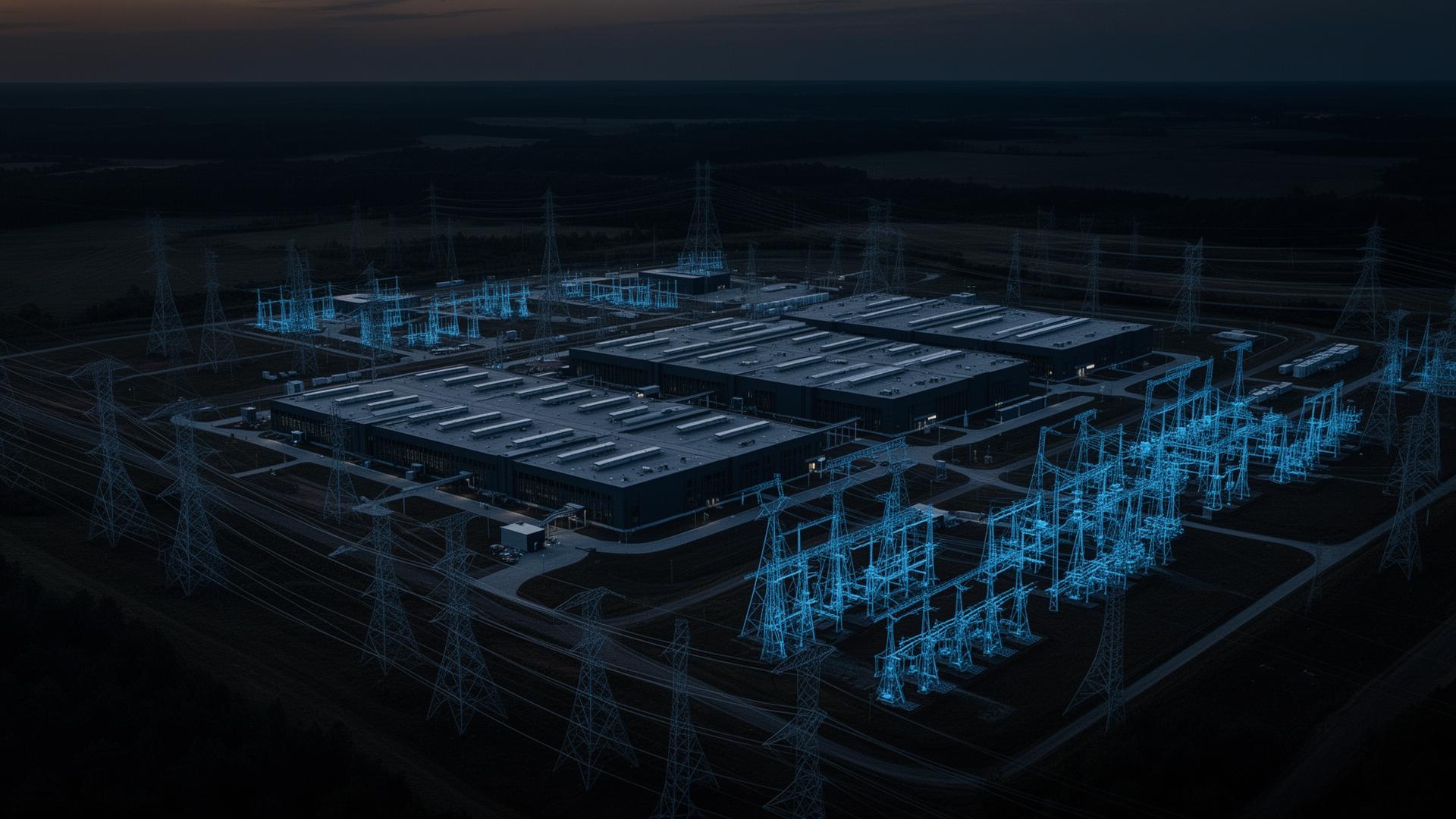
A geospatial intelligence layer that combines transmission topology, substation capacity, congestion patterns, and parcel-level land economics into a single institutional view.
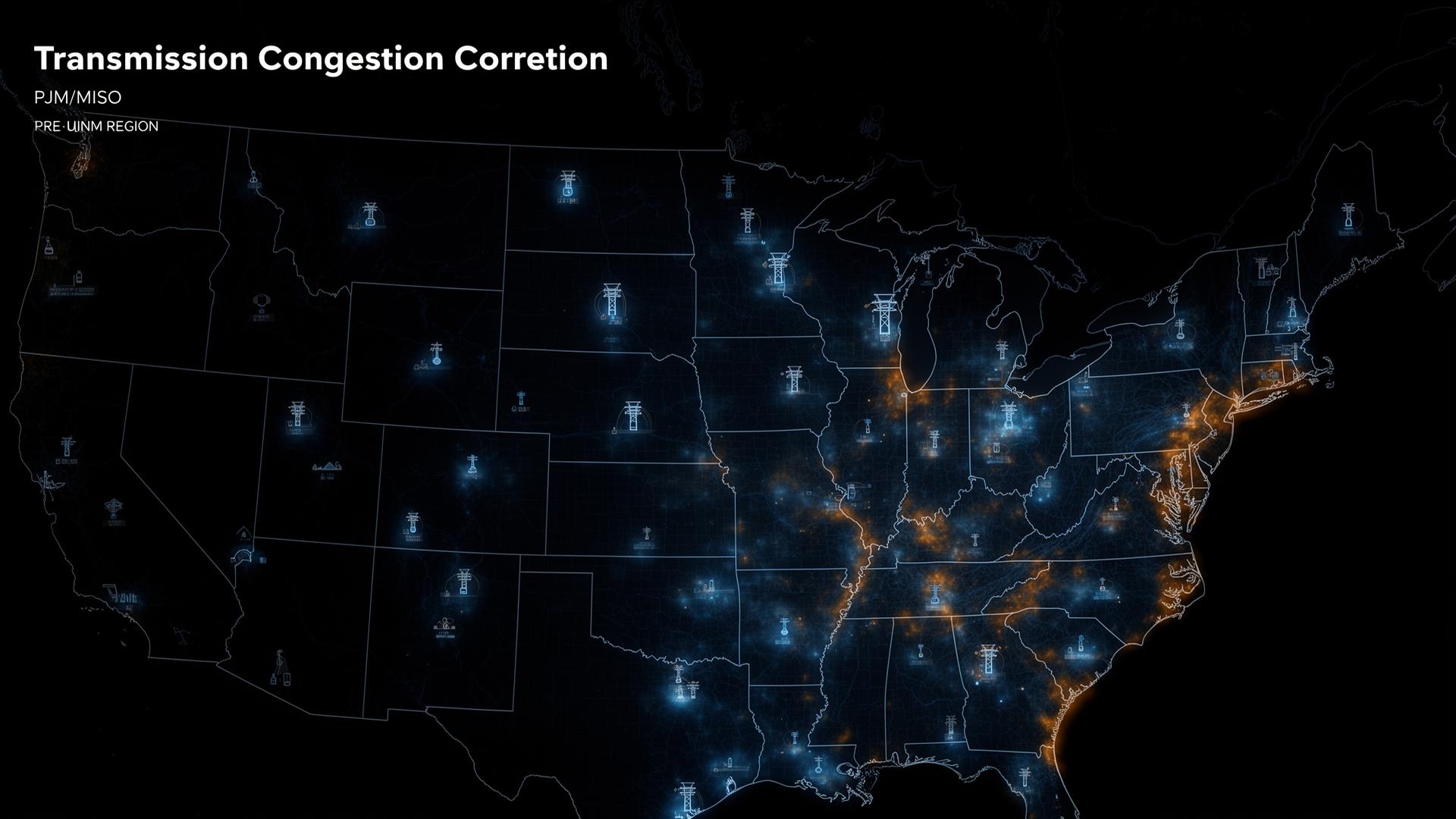
How the 2025 BRA results reshape capacity values, queue strategy, and hyperscale load deliverability across the RTO.
Tracking 47 GW of announced load and the transmission corridors that will determine deliverability.
Why hyperscaler power procurement timelines are breaking the traditional utility planning cycle.
Gridur engages on a retainer model — embedding alongside institutional teams as a continuous infrastructure intelligence and strategy partner.
Power-constrained markets, transmission-aware deployment, and infrastructure scarcity are reshaping the underwriting standard for energy and digital infrastructure.
A finite set of transmission-adjacent, deliverable sites will absorb the majority of near-term hyperscale demand.
Capital allocators that integrate transmission and queue intelligence into underwriting will compound advantage.
Energy and capacity markets are repricing around scarcity. Positioning ahead of repricing is the alpha.
"Most groups chase projects. Gridur focuses on understanding where infrastructure demand, transmission capacity, and power availability are moving — before the broader market recognizes the opportunity."
We model the grid before we model the asset. Deliverability anchors every recommendation.
Continuous coverage across queues, capacity, and load — not point-in-time engagements.
We position institutional capital ahead of repricing — not in reaction to it.
Built by operators and capital allocators for boards, ICs, and infrastructure funds.
Scarcity windows are measured in months. Our intelligence cadence matches the cycle.
We translate hyperscaler procurement behavior into infrastructure positioning.
Engage Gridur to integrate institutional infrastructure intelligence into your strategy, origination, and capital deployment.
Discuss Infrastructure Positioning →